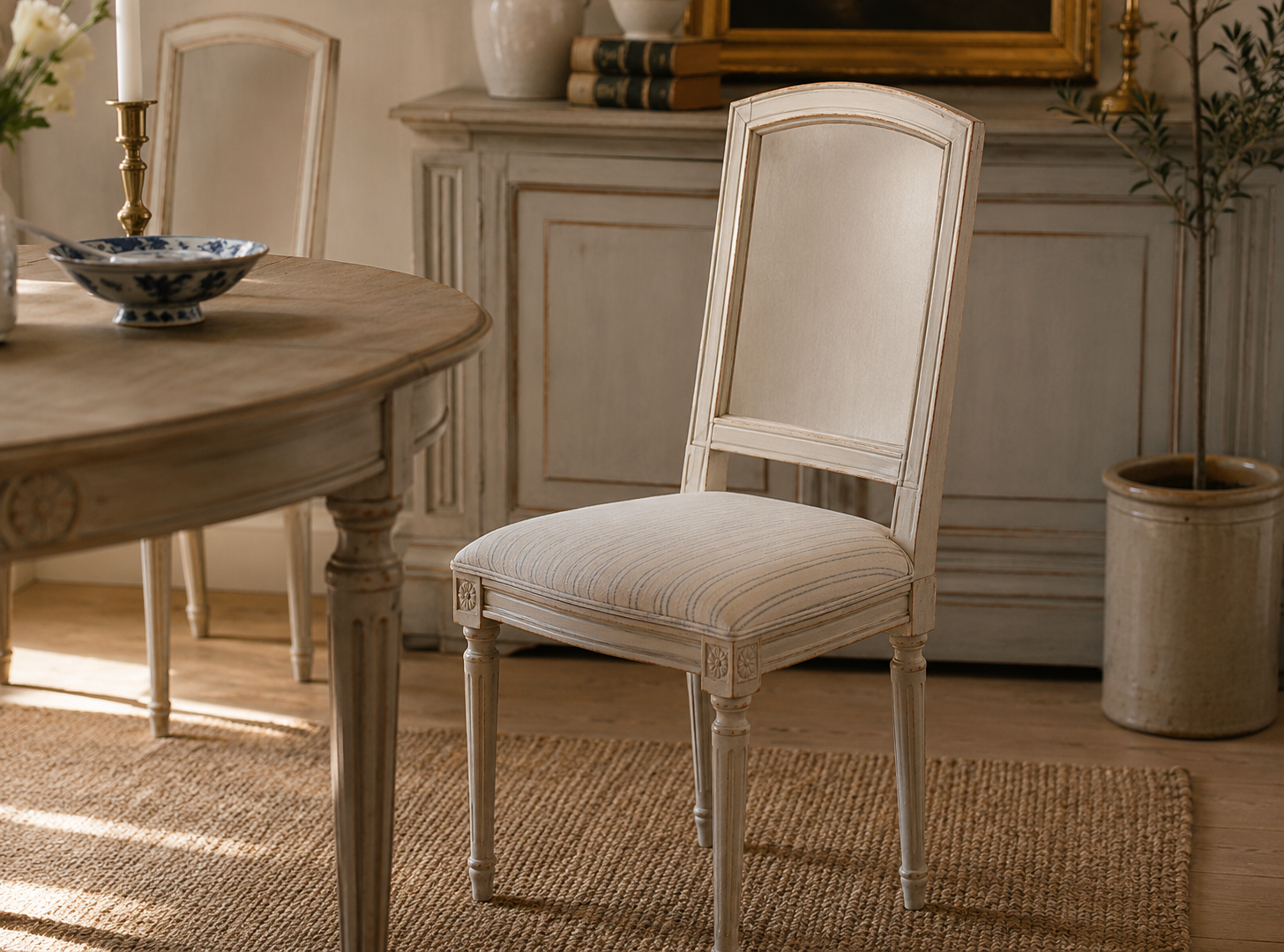
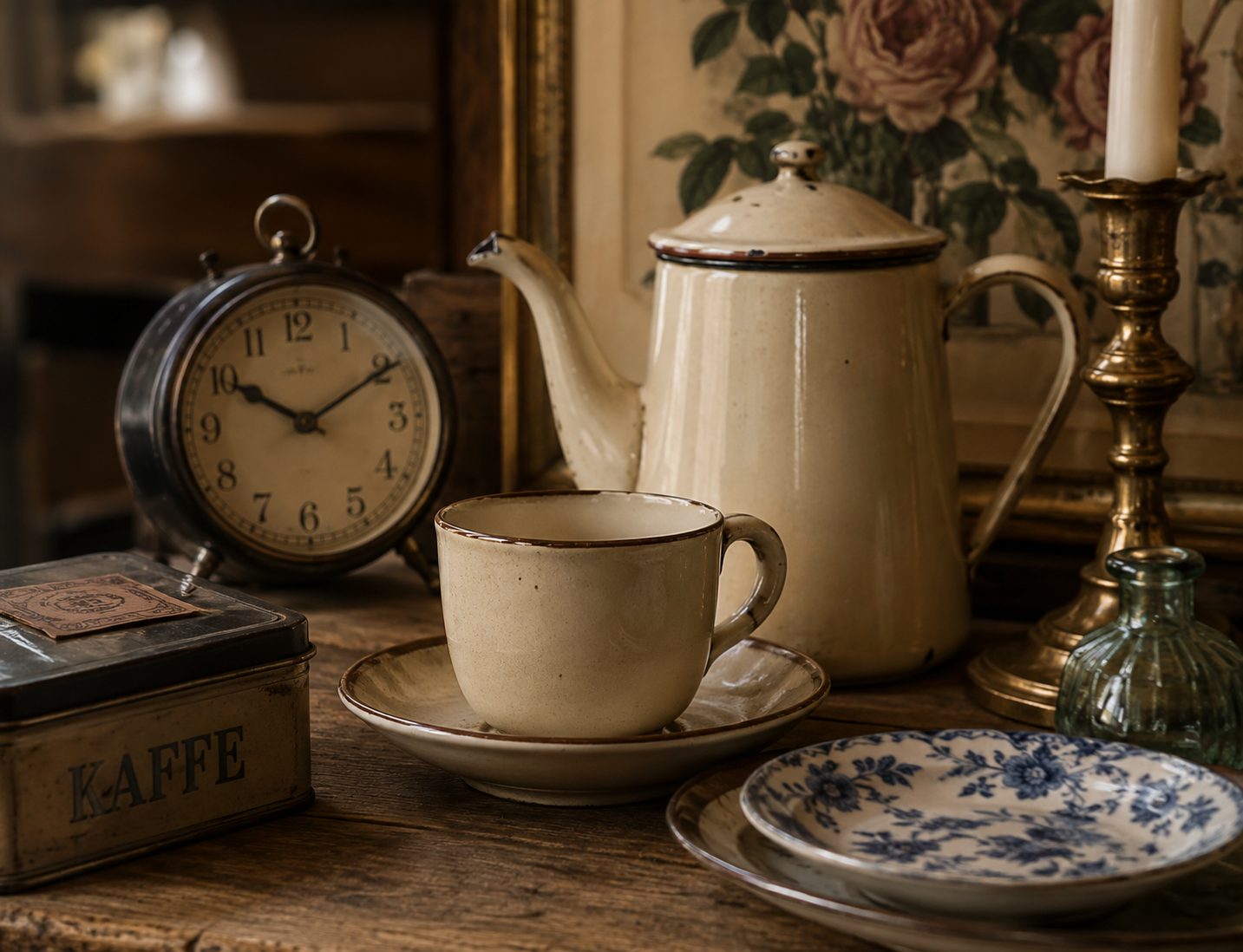
At flea markets and in second-hand shops the terms get mixed up freely – retro, vintage and antique are sometimes used as if they were synonyms. They are not. The difference is not merely semantic: it determines the value of an object, how it is taxed on import and whether it can be classed as cultural heritage. Here is the correct definition of each term.
Antique: at least 100 years old
The strictest and clearest term. For an object to be called antique in the proper sense, it must be at least 100 years old. That is the definition used by customs legislation, auction houses and most professional antique dealers.
There are exceptions: in the USA the 100-year limit is sometimes applied strictly, whereas in Sweden and Europe it can vary somewhat depending on context. But the rule of thumb is clear: a chair from 1924 is an antique. A chair from 1930 is not – yet.
Antique value is not only about age but about a combination of age, craftsmanship, rarity and provenance. A mass-produced chair from 1890 is older than a hand-turned object from 1900 but not necessarily worth more.
Vintage: an original from a distinct period (roughly 20–99 years)
Vintage is an original object – not a copy or a new production – from an identifiable historical period, usually at least 20 years old. In practice the term is used above all for objects from the 1920s up to the 1990s.
Vintage is about authenticity: the object was genuinely made during the era it represents. An Arne Jacobsen Ant chair from 1960 is vintage. A newly produced Ant chair bought today is a modern object – not vintage, even if it is an exact copy of the original.
The collecting trade often makes finer distinctions: "early vintage" for the 1920s–1940s, "mid-century" for 1940–1970 and "late vintage" for 1970–1990.
Loppos tip
Trust the object, not the label. Photograph it and let Loppos Scan give you an estimated period to start from.
Retro: a new style that imitates the old
Retro is a description of style, not a category of age. Retro refers to objects – new or relatively new – that deliberately imitate an older stylistic expression. A newly produced coffee machine in 1950s design is retro. A 1970s-inspired wallpaper printed today is retro.
Retro is about the aesthetic, not the age. A retro lamp may have been made last week. That makes it neither more nor less valuable as a design object, but it has no antique value and no collector's value in the traditional sense.
Why does it matter at the flea market?
A seller who calls a coffee pot from the 1970s "antique" is wrong – it is vintage. If the pot is new but looks 1970s-ish, it is retro. The difference can affect the price: antique objects are taxed differently on import and may have cultural-heritage protection.
A practical rule of thumb for the flea market: always ask "when was it made?" rather than "how old does it look?". A stamp, a serial number or a factory label can often date an object precisely. If those clues are missing, look at the material, the construction technique and the patterns and compare with known dated examples.
Summary
Antique: at least 100 years, an original object, craftsmanship value. Vintage: 20–99 years, an original object from a distinct era, stylistic authenticity. Retro: a new style that imitates the old, no age limit, an aesthetic category.