A brass find that looks hopelessly tarnished is often just a few minutes' work away from gleaming again. But brass is a delicate material, and the wrong method can do irreparable damage. Here's how to get it right.
First: solid brass or plated?
Hold a magnet against the object. If it sticks, there's probably a thin layer of brass over iron or steel — in which case you'll need to be extra careful, because if you grind through the layer it's gone. If the magnet doesn't stick, the object is most likely solid brass and can take more.
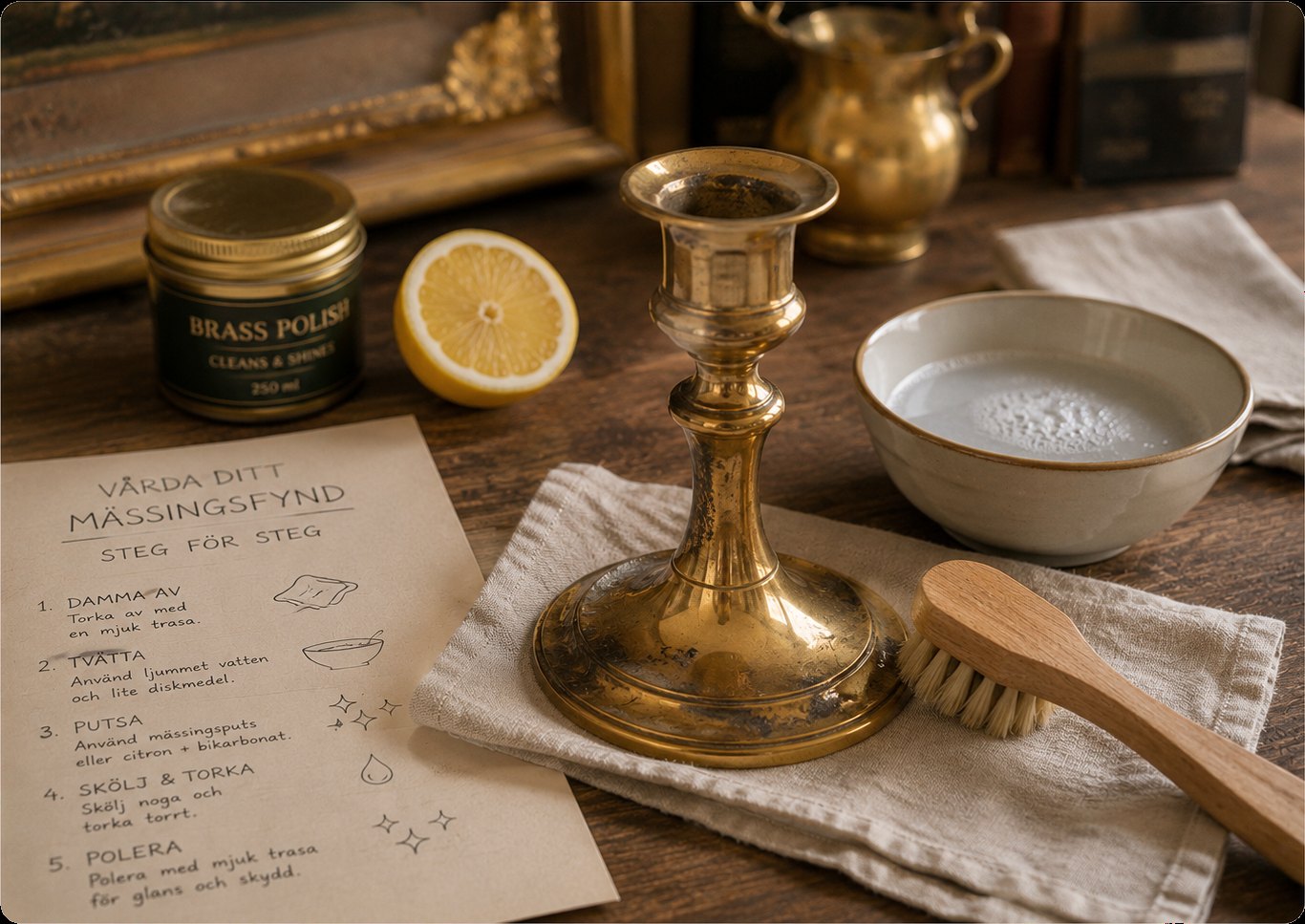
Step by step
- Wash first. Remove grease and dust with warm water and a little washing-up liquid. A lot of what looks like tarnish is really just dirt.
- Try a mild acid. Mix a paste of lemon and bicarbonate of soda, or use vinegar and salt. Apply it, let it work for a minute and rub with a soft cloth.
- Work in small sections. Rinse and dry after each part so you can see the result and avoid overdoing it.
- Polish gently. Finish with a brass polish and a clean cotton cloth. Work in circles with a light touch.
- Protect the surface. A thin layer of microcrystalline wax slows the shine from dulling again.
When not to polish
Patina isn't always a flaw — on older, collectable pieces it's part of the value. An even, dark age tone on an eighteenth-century mount should, as a rule, be left alone. If you're unsure whether the object is collectable: don't polish until you know.
Wash first, polish last — and always stop one rub short of where you think you're done.
Loppos tip
Before you reach for the polish, scan the lamp in Loppos. If it turns out to be a signed design piece, an untouched patina may be worth more than a buffed-up surface.
With the right technique, your find will stay beautiful for years — and you'll have learned a method that works on everything from door handles to candlesticks.