Porcelain's secret lies on the underside. The base mark can reveal the maker, the factory, the period and sometimes even the exact year. Learning to read marks is the single most valuable skill a porcelain collector can acquire.
Start with the base mark
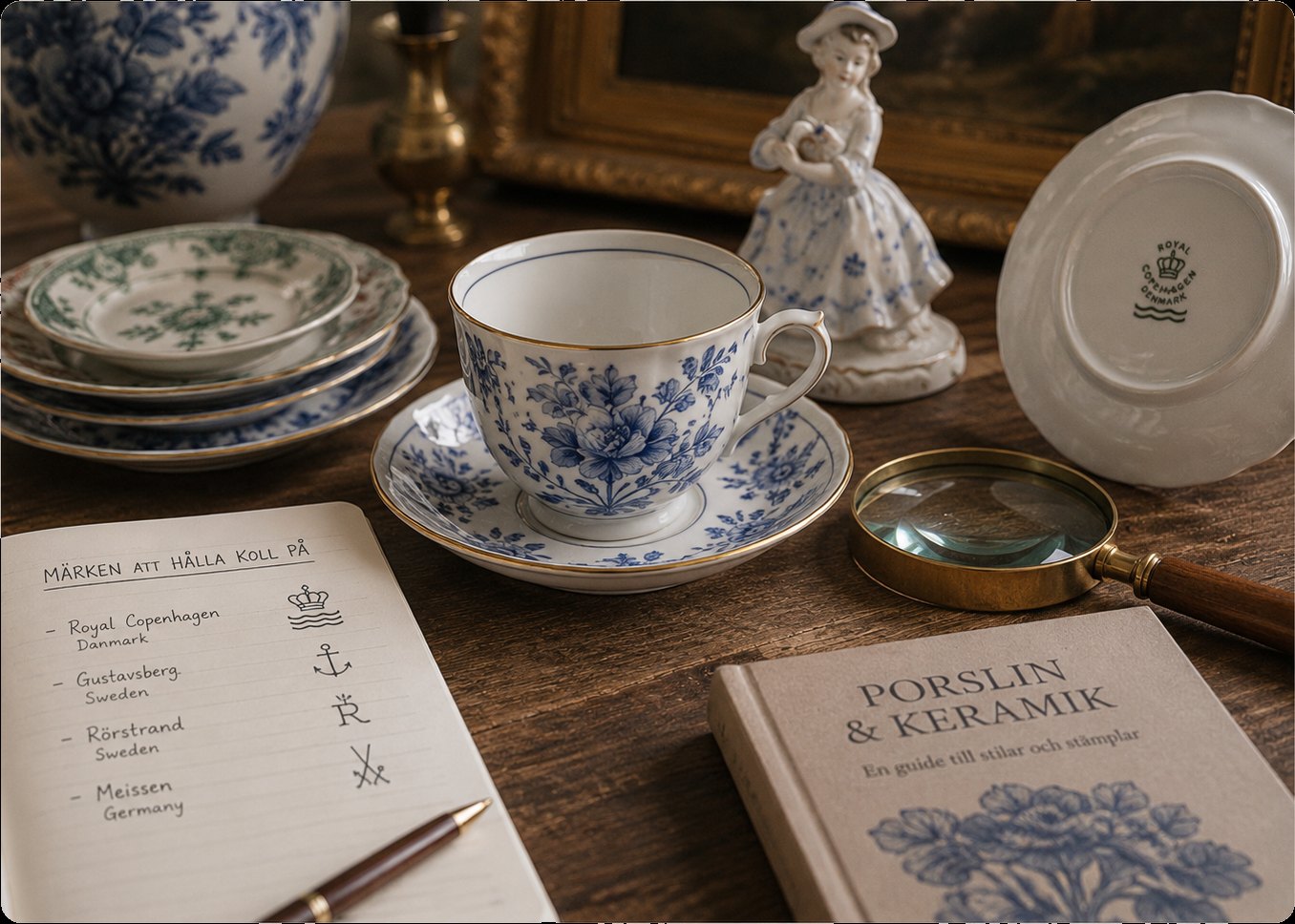
Turn the piece over and study the mark closely. Note three things: is it impressed into the body, under the glaze or over it? Underglaze marks are generally older and harder to fake. Colour, typeface and any numbers are all clues to the period.
Swedish marks to recognise
- Gustavsberg — the anchor is the classic. The styling and additions change with the era and the designer.
- Rörstrand — among Europe's oldest factories; the mark has changed many times since the eighteenth century.
- Höganäs — known for salt-glazed stoneware in earthy tones.
International classics
- Meissen — the crossed swords in blue are one of the world's most copied marks, so examine the quality carefully.
- Royal Copenhagen — three waves for the sounds of Denmark; painted lines beneath the mark date the piece.
- Wedgwood — often an impressed name, sometimes with a date system in letters.
Condition decides the final value
A perfect mark won't save a damaged object. Run your finger along the edges and feel for chips, hold the piece up to the light to spot hairline cracks, and shine a lamp on it too — glue repairs often light up differently. Crazing, that is to say fine cracks in the glaze, lowers the value but is sometimes simply a sign of age.
A beautiful mark on a cracked piece is still a cracked piece — always weigh the stamp against the condition.
Loppos tip
Marks can be worn and hard to read. Photograph the base in raking light and let Loppos Scan interpret the mark — you'll get suggestions for the factory and period plus examples of what similar pieces have sold for.
With a little practice you'll read a base mark as quickly as a book title. And when you do, every flea-market shelf turns into a little archive of stories waiting to be discovered.