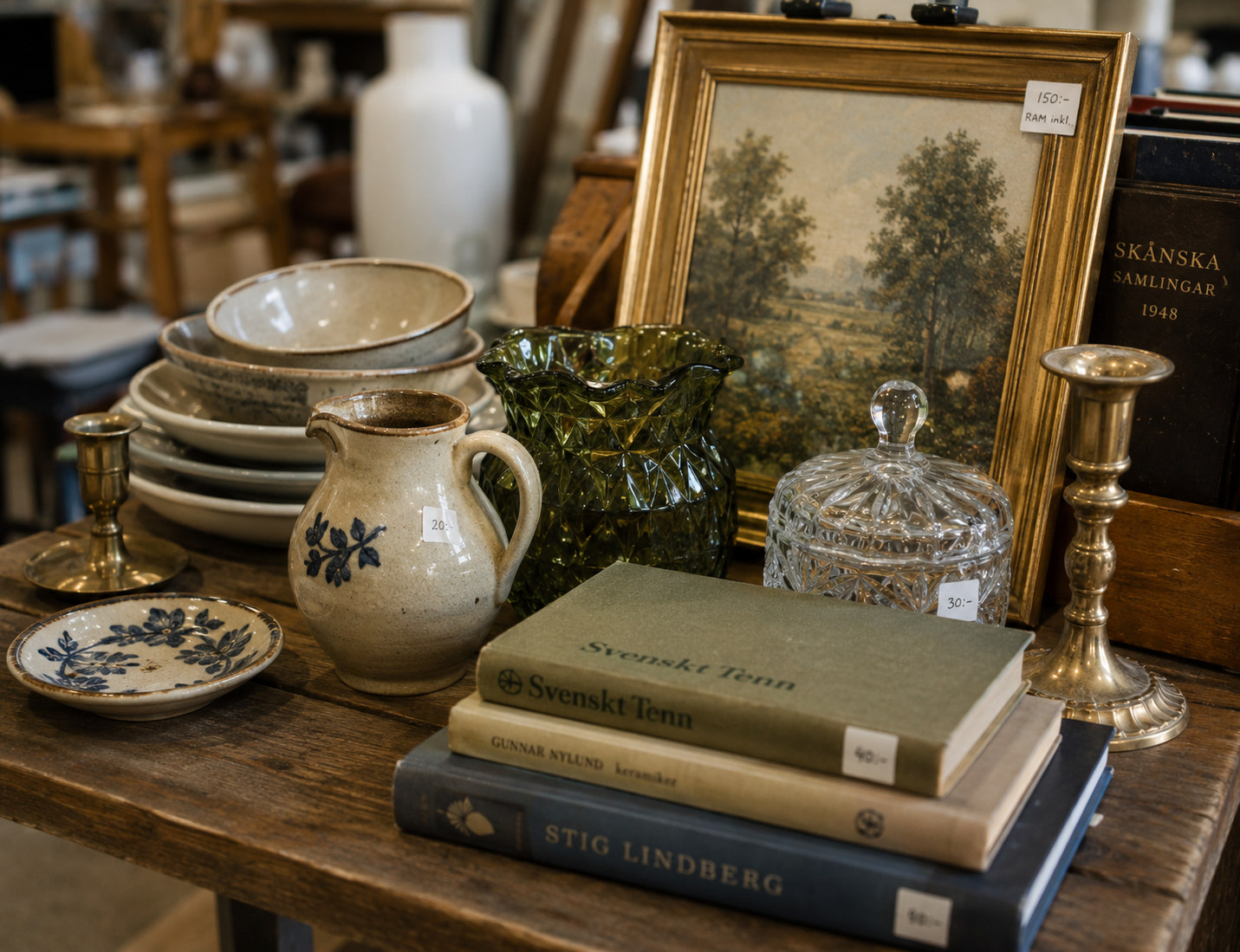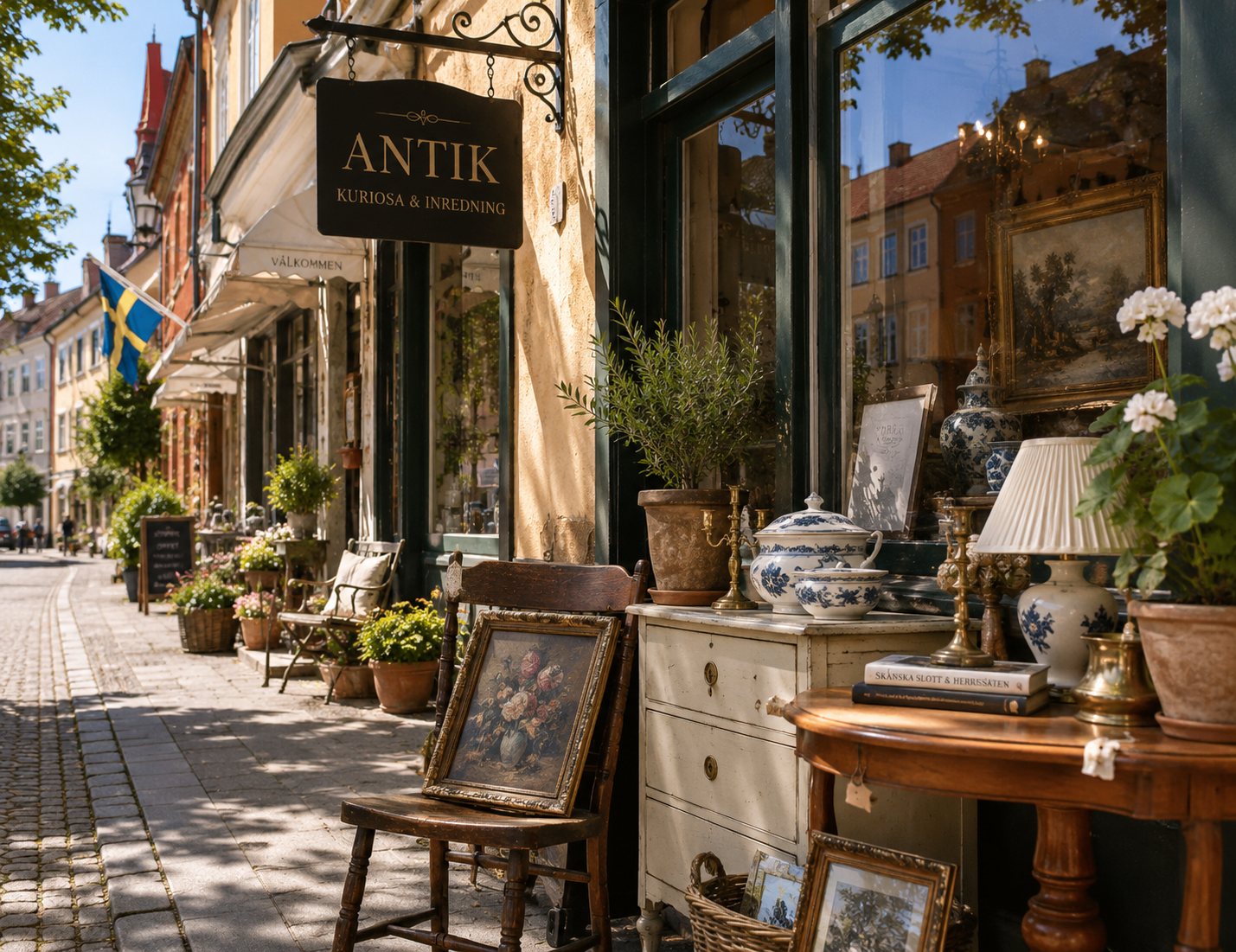
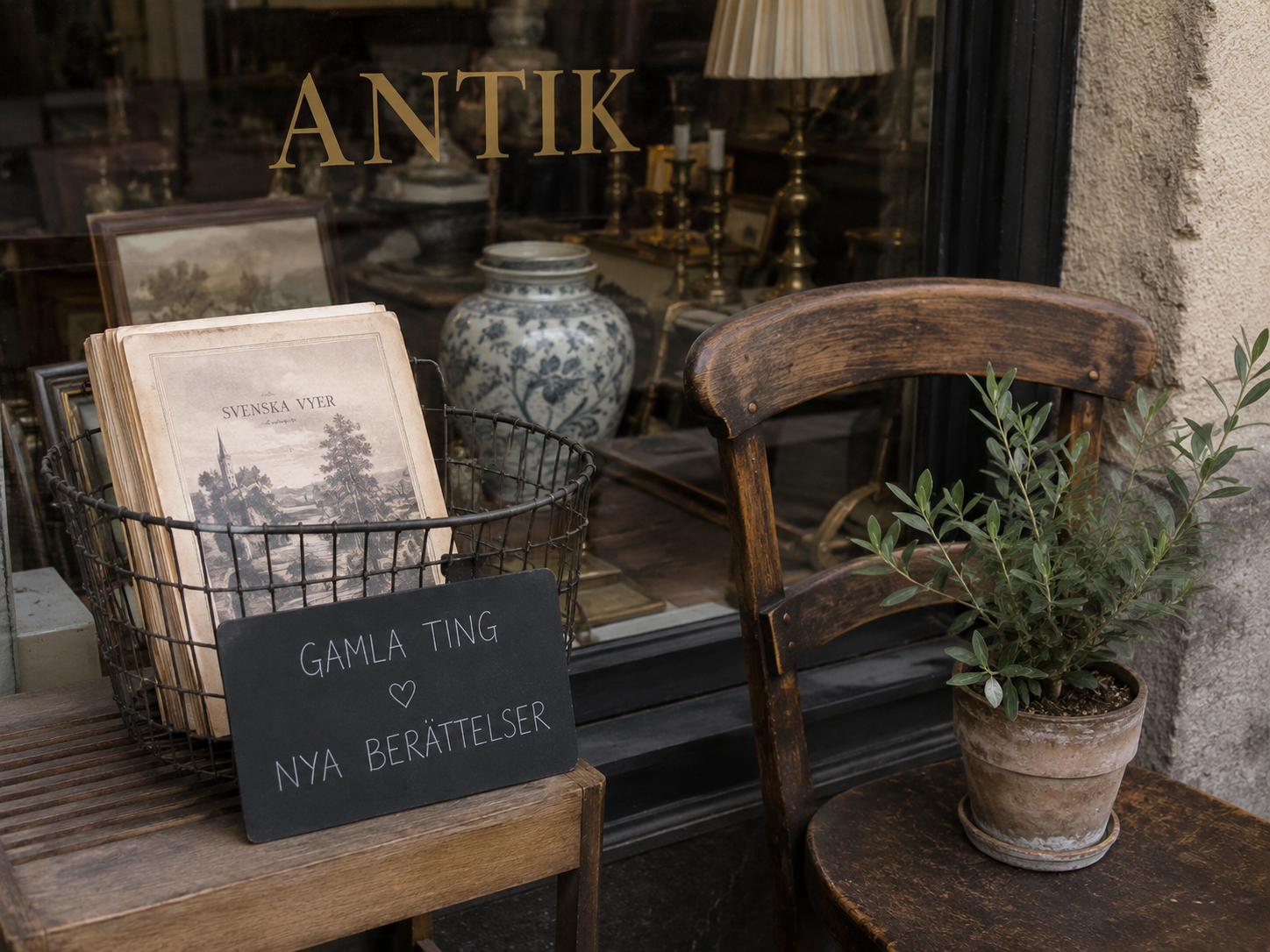
You're holding an object at the flea market. The price seems reasonable, but you're not sure – is it a bargain or is it too dear? Quick valuation is a skill you build up over time, but there are concrete tools that help you from day one. Here's the method.
Tool 1: Google Lens – identify in seconds
Open the camera on your phone and activate Google Lens (built into the Google app or via the iOS camera). Point the camera at the object. Google Lens identifies objects visually and often returns direct matches to similar items for sale in online shops and auctions.
Works best for: ceramics with clear patterns, well-known designer furniture with distinctive silhouettes, art glass by a known designer.
Works less well for: unusual objects with no online presence, objects in poor light.
Tool 2: Tradera's sold history
Tradera is by far Sweden's best reference database for what people actually pay – not what sellers ask. Go to Tradera.com and search for the object's name. Important: sort by "Ended auctions" to see what things actually sold for, not the price they started at.
A jug that started at 1 krona and sold for 450 kronor is worth roughly 400–500 kronor on the market right now. A jug sitting unsold at 300 kronor is a sign that 300 kronor is too high.
Loppos tip
Trust your gut when the numbers all point the same way — but always walk away rather than pay more than your predetermined ceiling.
Tool 3: Barnebys.com
Barnebys is an aggregator of auction results from hundreds of auction houses. Search by object name or designer to see what similar things have sold for at Bukowskis, Stockholms Auktionsverk and international houses. Barnebys gives a clear picture of the upper end of the market price.
Rule of thumb: a flea-market price should be 30–60 % of the Barnebys level to count as a find.
Three rules of thumb when the tools fall short
A mark = more value. Any form of identifying marking – a maker's stamp, a designer's signature, a serial number – gives you more certainty and a better resale price.
Condition halves or doubles it. A perfect example of an object can be worth twice as much as one with a chip or crack. Always check the bottom edge, the handles and any delicate parts carefully.
Complete is better. A full service is worth more per place setting than the individual pieces sold separately. A coffee service with every piece intact is a clearer case of value.
Step by step on the spot
Take a photo of the object and any mark. Run Google Lens – if you spot a known designer or a known brand, search for it straight away. Go to Tradera and filter by ended auctions. Check the condition against what you find online. Make the call: the price is a bargain, reasonable or too high, based on what the market actually pays.
The whole process takes 3–5 minutes. That's enough to avoid the worst mistakes and catch the best finds.